01
The global buildout
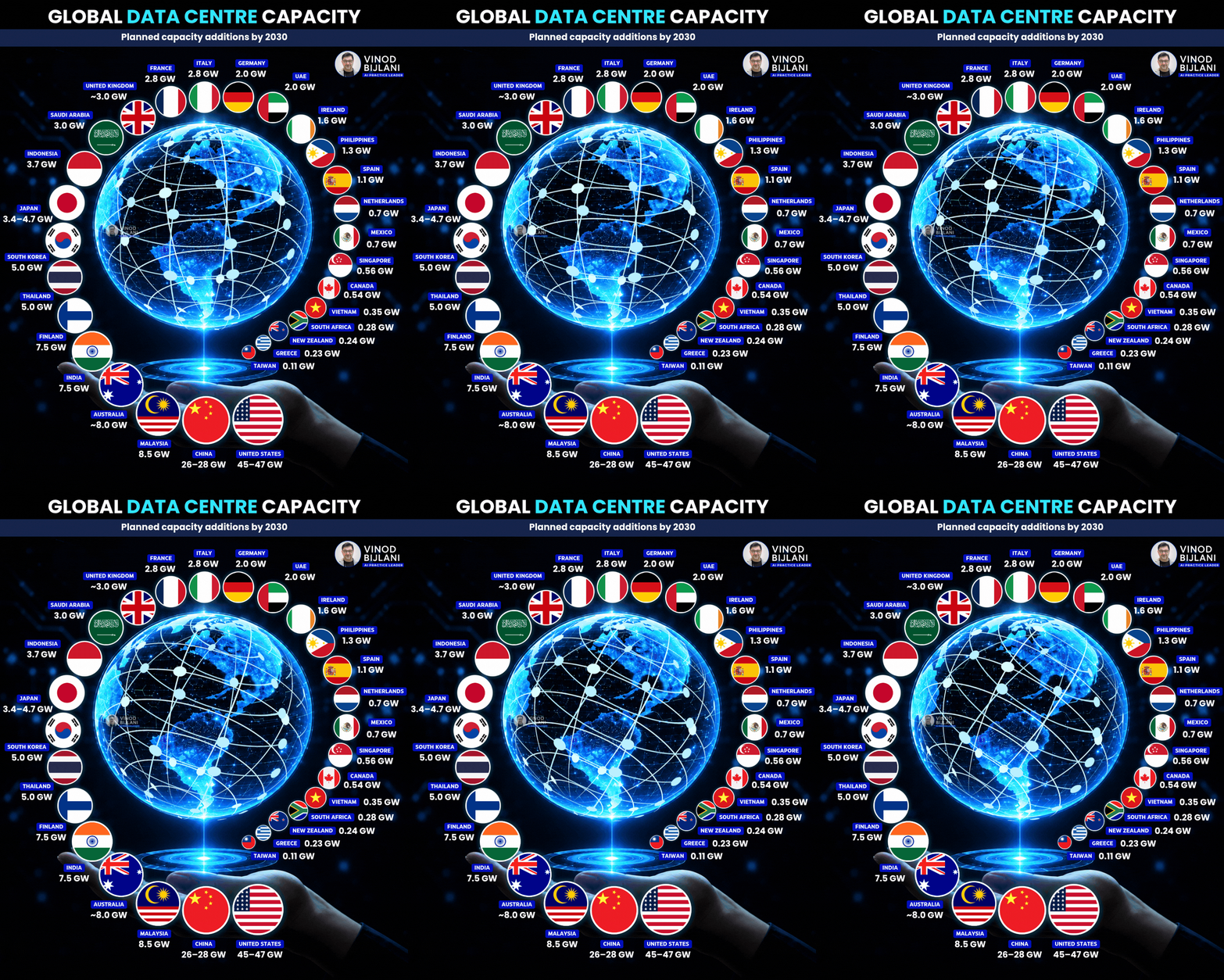
Where data centre capacity sits today, where it is heading by 2030, and how much of the pipeline will actually be delivered.
Field notes from customer conversations, conferences and the AI infrastructure build-out, each with an infographic summary.
Notes on the shift from data centres to AI factories, in three parts.
Where data centre capacity sits today, where it is heading by 2030, and how much of the pipeline will actually be delivered.
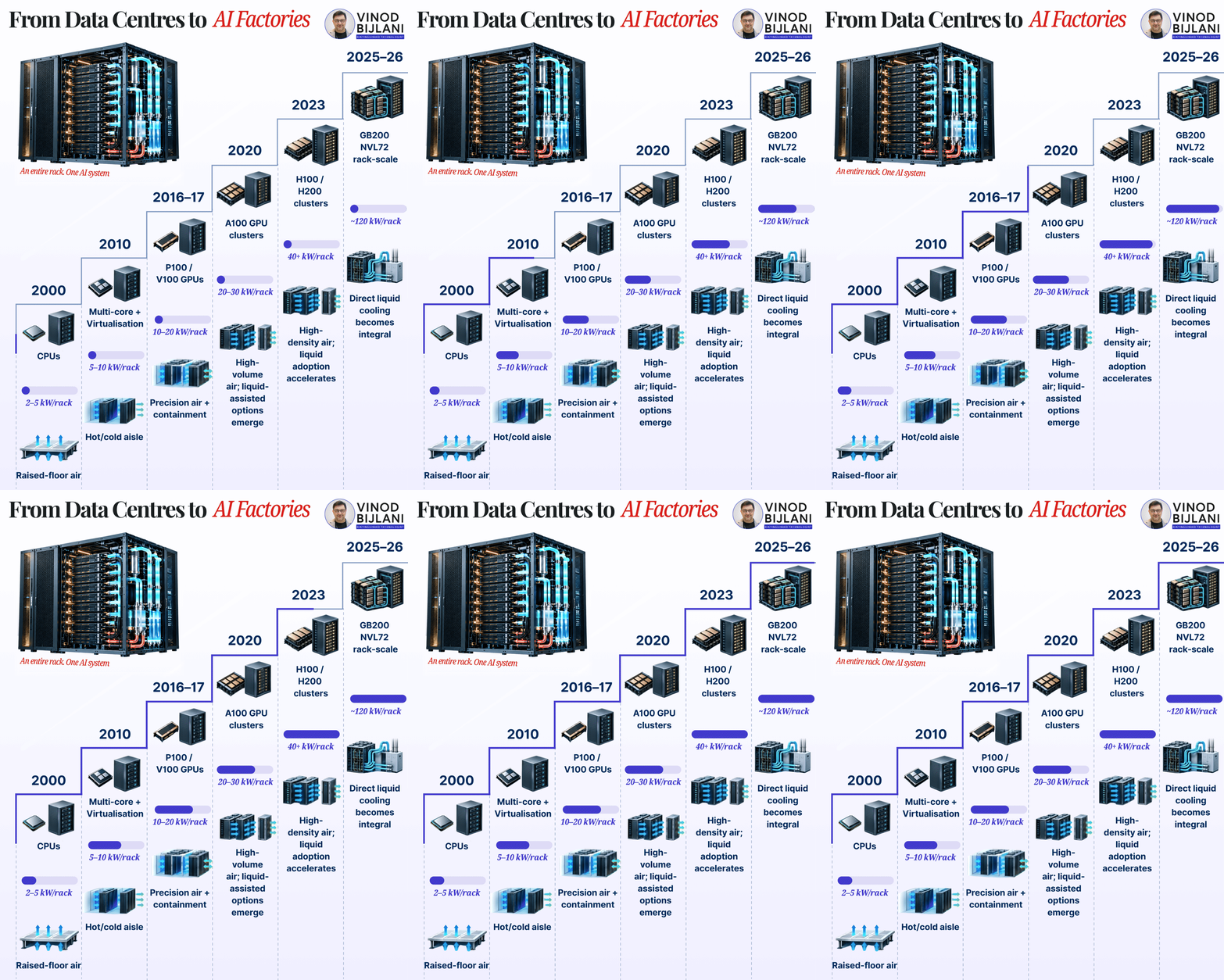
From data halls to rack-scale AI: power, cooling, orchestration and the move to the edge.
What a token, a FLOP and a megawatt really cost, and where each workload should run.
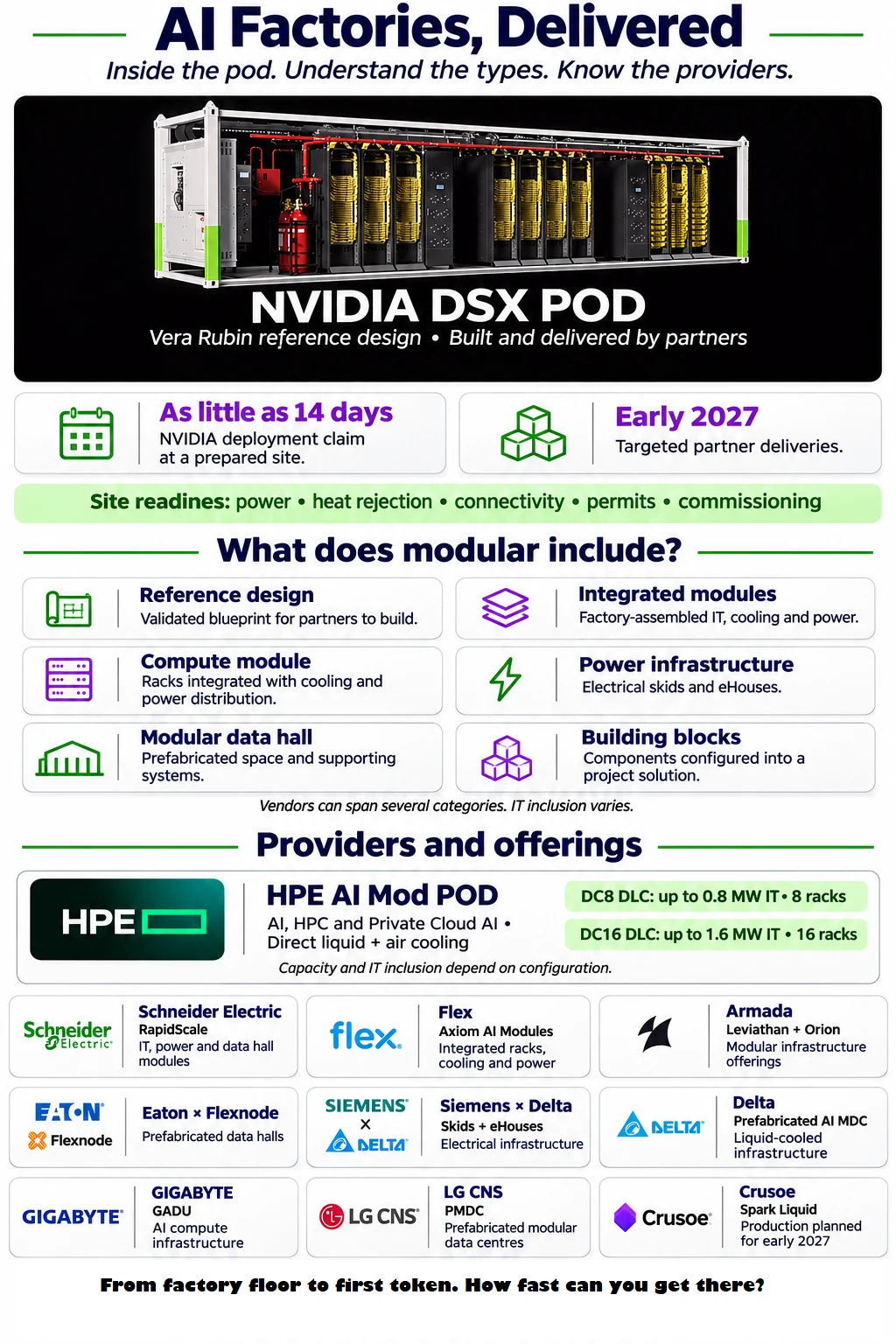
Modular AI factories are arriving as pods: inside the pod, the types of modular offering, and the providers building them.
Pipelines are not delivery schedules. Grid delays, cancellations and the gap between announced and energised capacity are already showing.
From a few kilowatts per rack to around 120 kW. A similar patch of floor, a very different demand on the building.
The industry is solving the compute problem. Enterprises are now facing the consumption problem, and that needs a governed token factory.
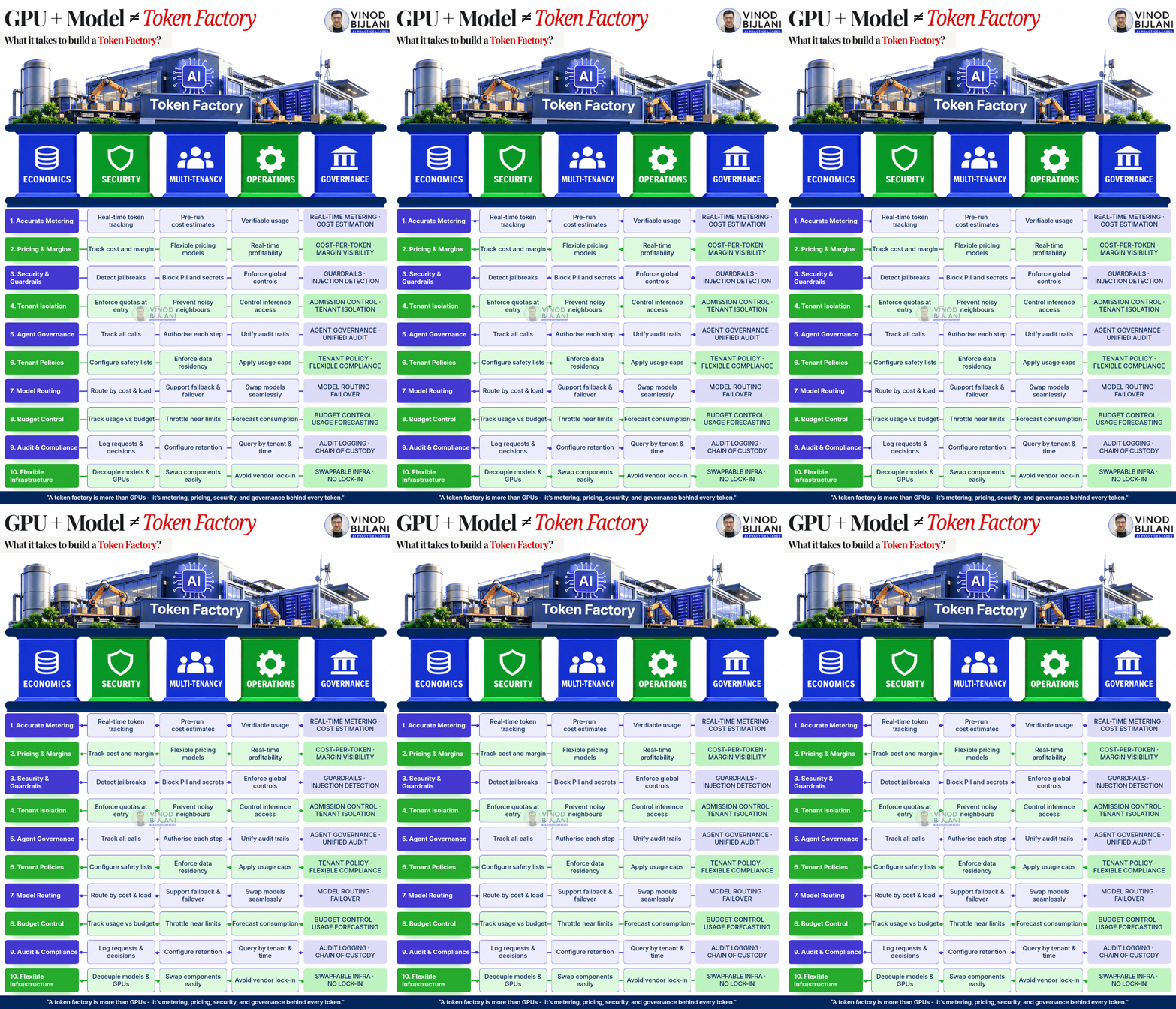
One question followed me from Taipei to Hong Kong. Four themes came up in almost every conversation.
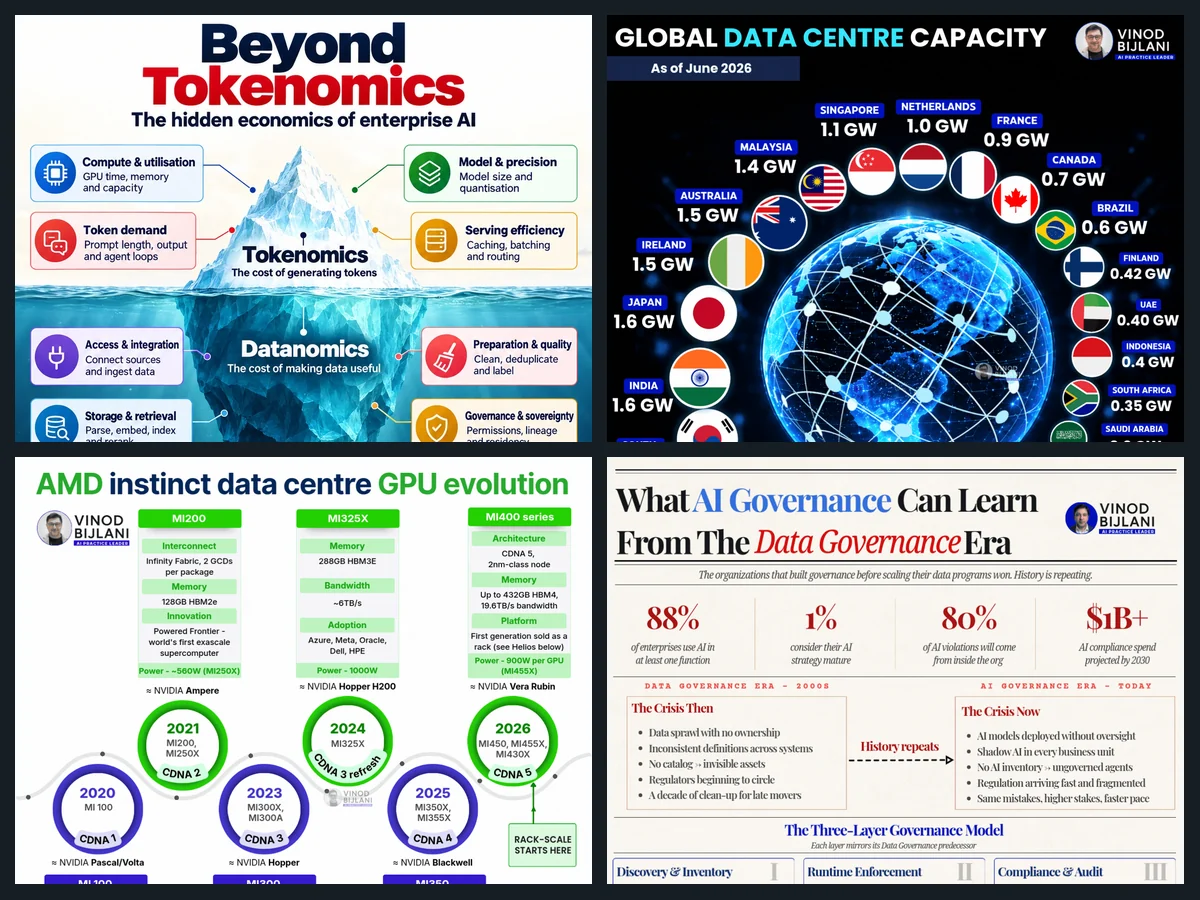
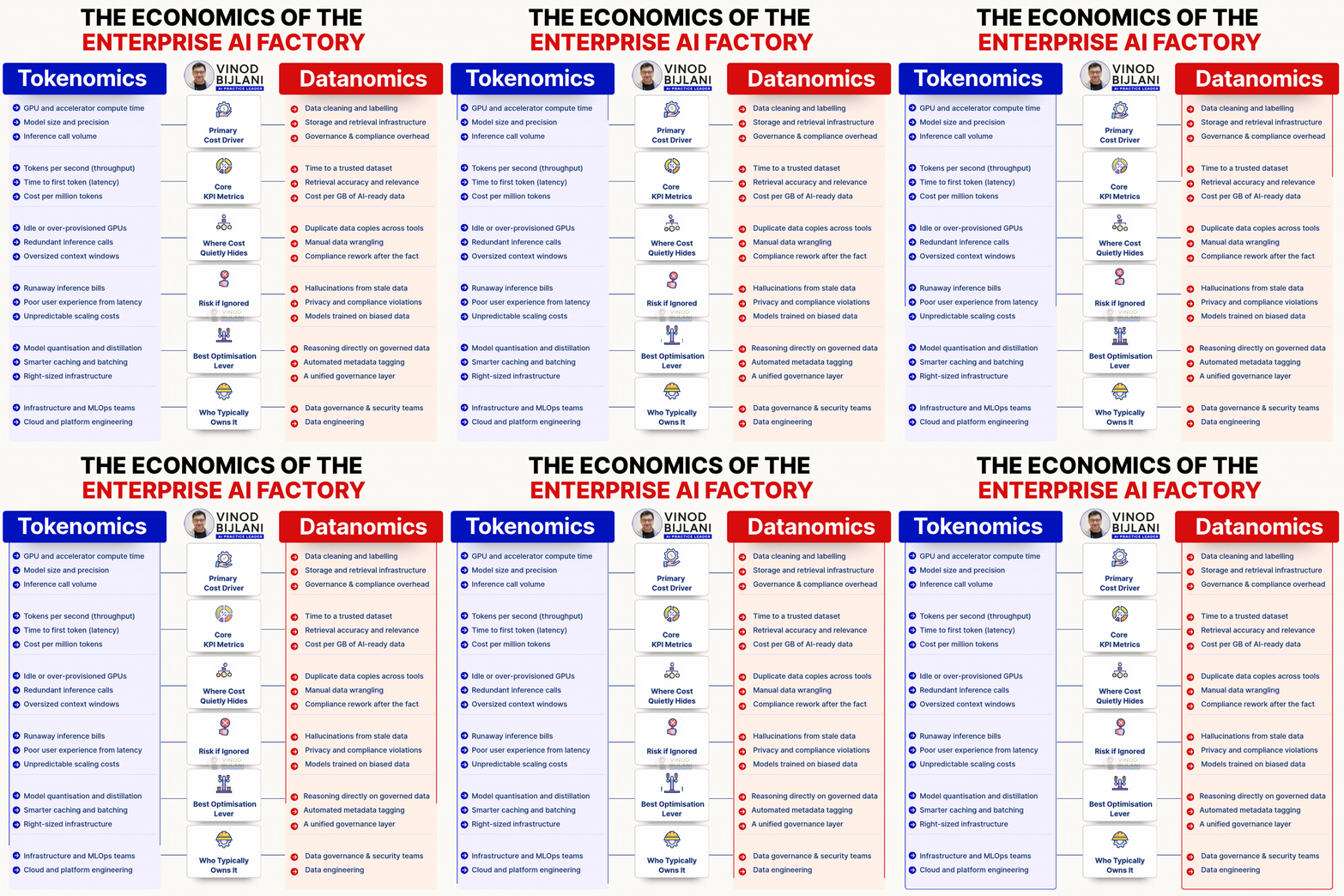
The token bill is only one part of the economics. Tokenomics plus datanomics shows more of the total cost of enterprise AI.
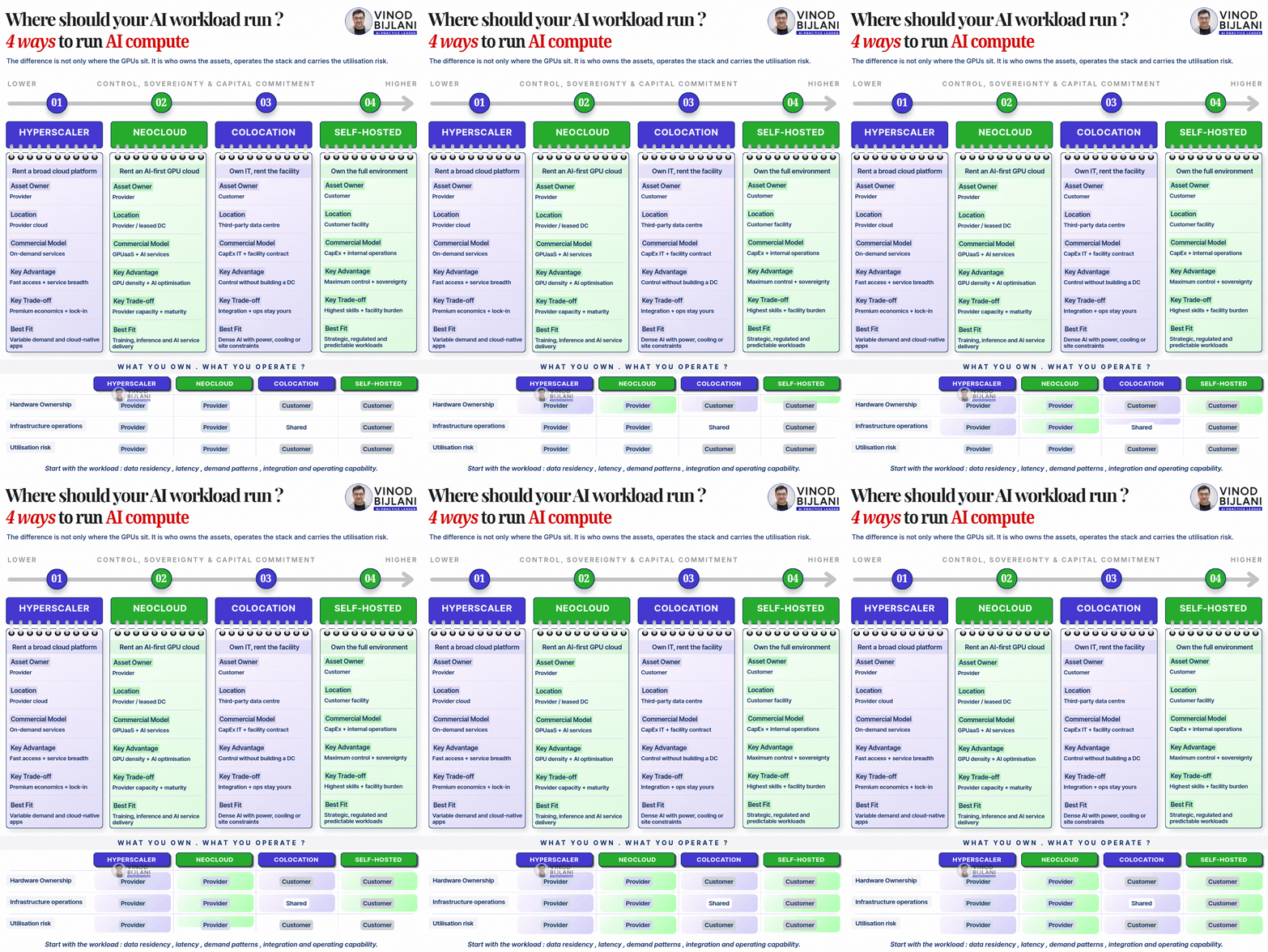
Recurring inference changes the placement economics. Cost, control and performance should decide where each AI workload runs, not habit.
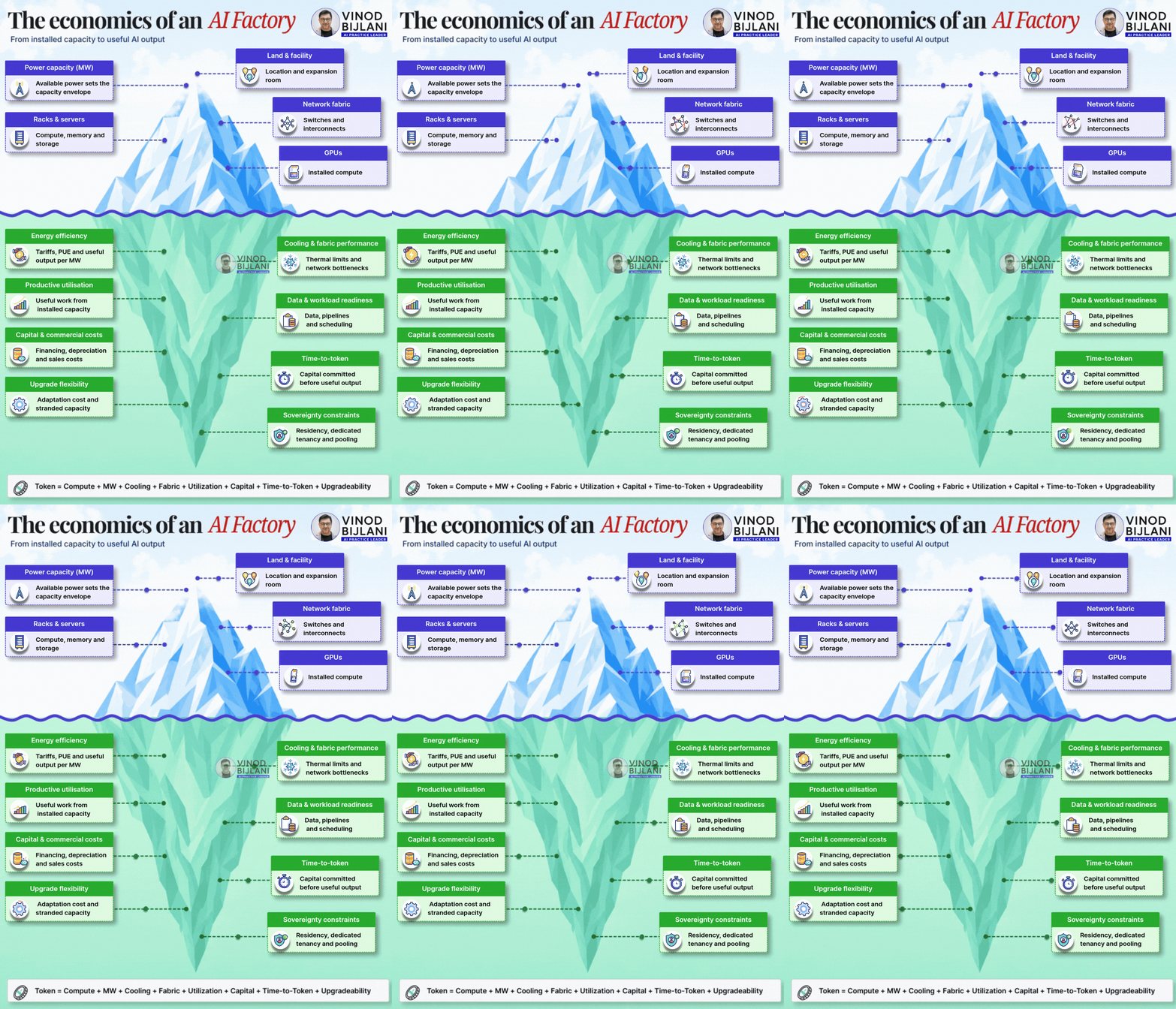
A GPU is a capital decision. Power, cooling, networking, utilisation and staging compound over the life of the AI factory.
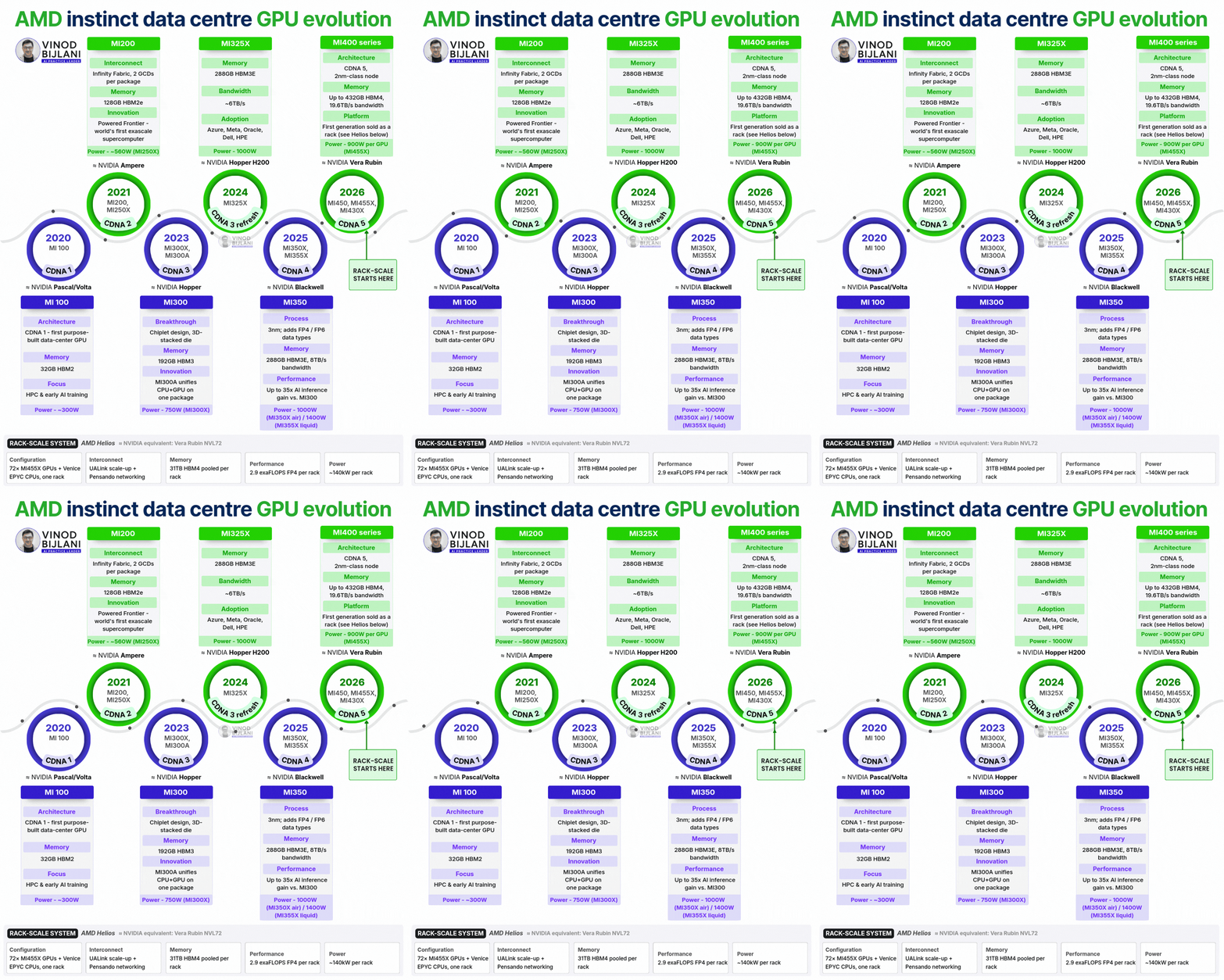
AMD's data centre GPUs have moved from a single accelerator to a rack-scale system. The system around the accelerator now matters as much as the chip.
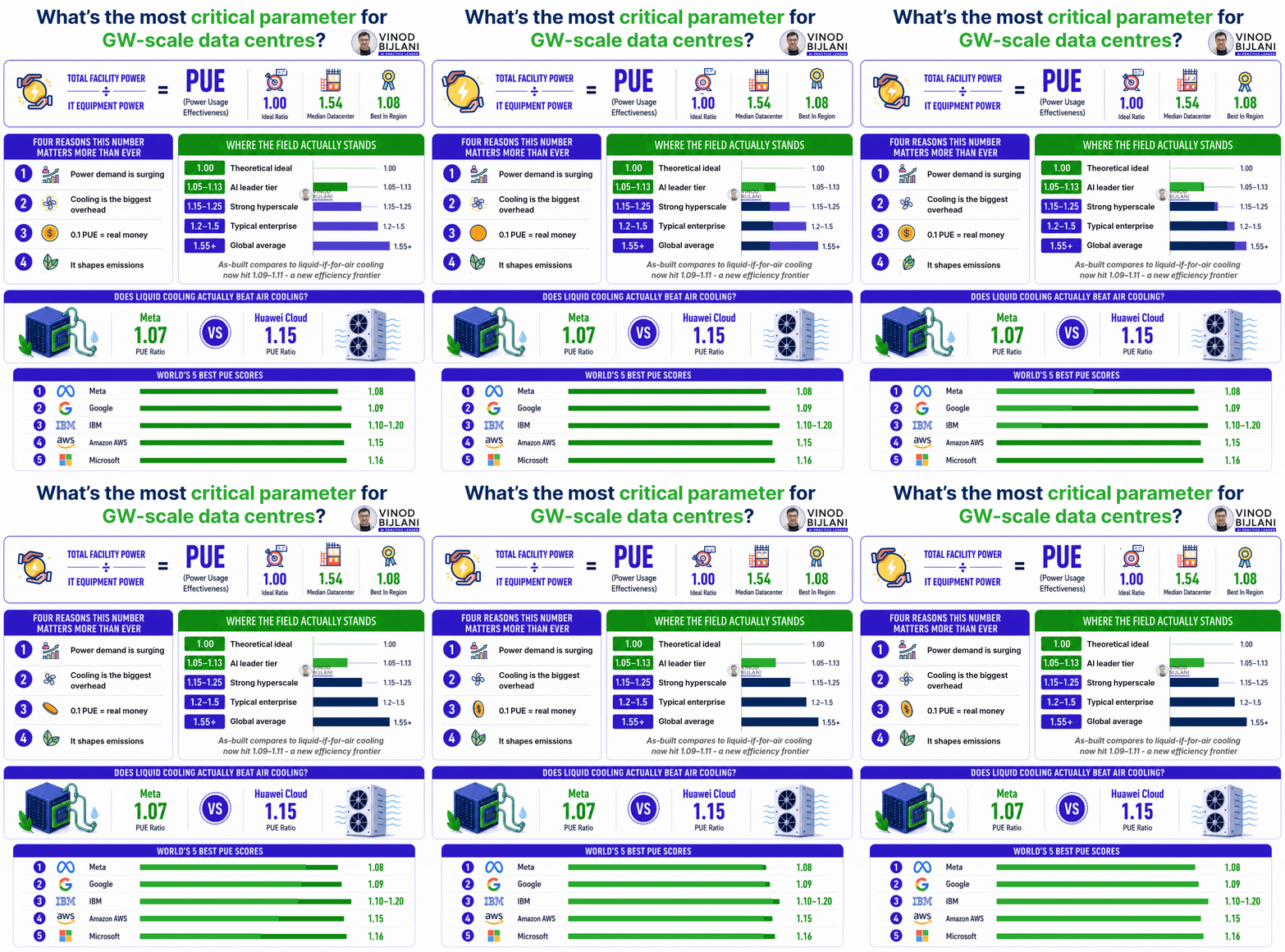
At 1 GW of IT load, the gap between an average and a highly efficient PUE is around 3,940 GWh and $315M of energy a year.
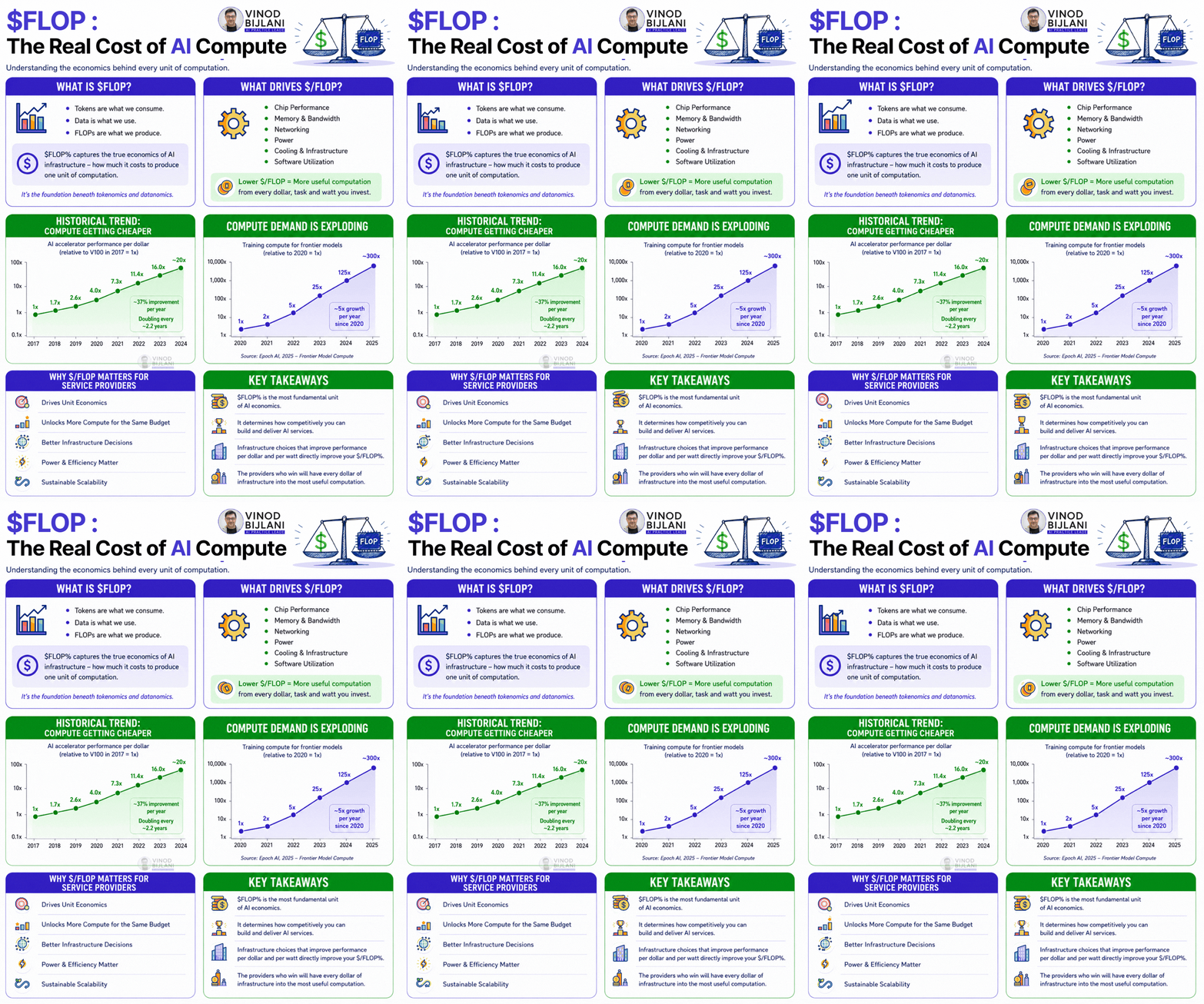
Price per million tokens tells you what an application consumes, not how efficiently the infrastructure produces it. That needs another lens: $/FLOP.
Edge AI is the bridge to physical AI. Scaling it safely needs a distributed AI factory: local execution, central control and evidence flowing back.
Mapping data centre capacity across 29 markets to 2030. Capacity is the headline; power, economics and value per megawatt decide how much becomes productive AI compute.
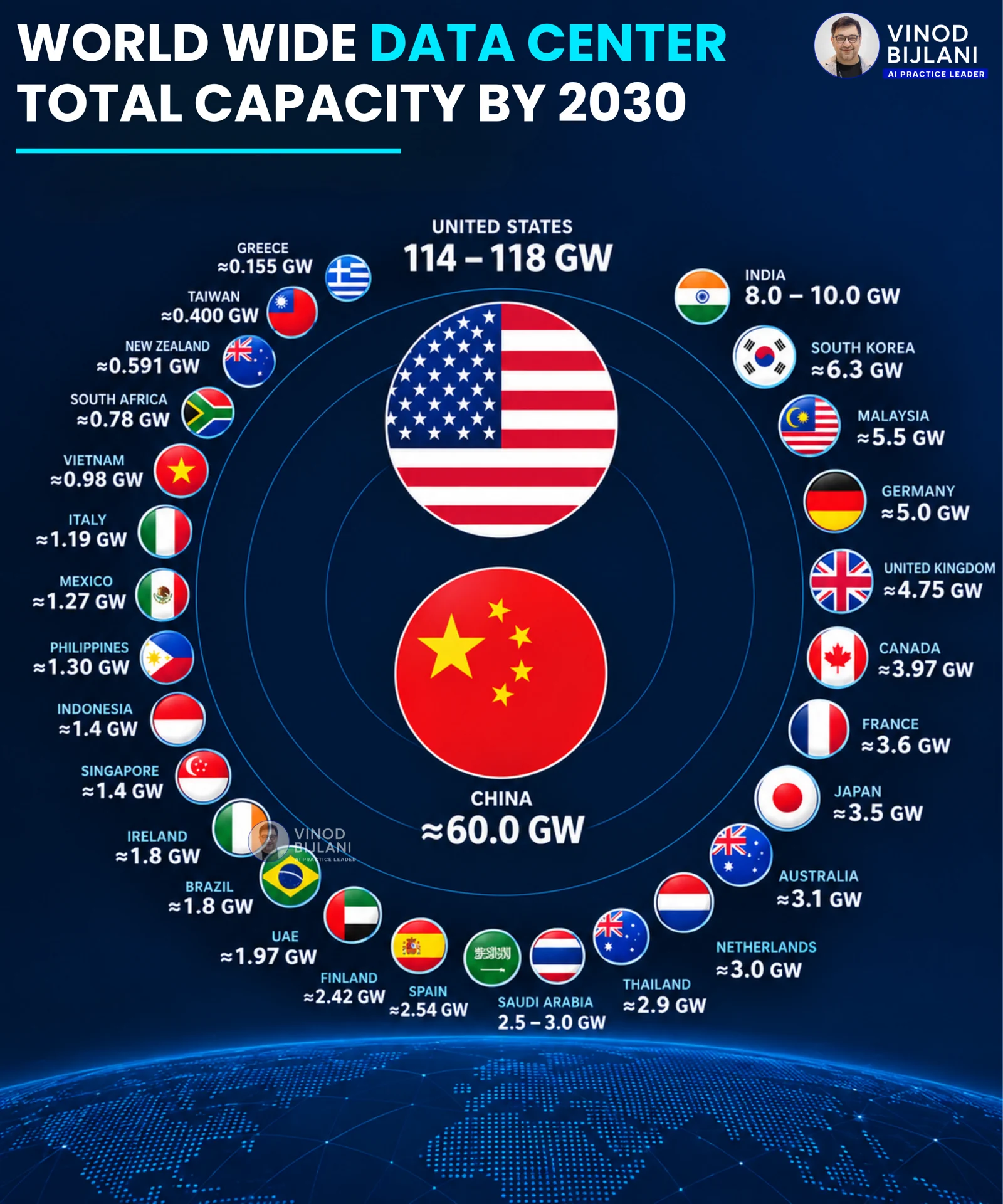
Operational capacity across 20 major markets, and the four kinds of operator behind it. The winners may be those who get the most value from every megawatt.
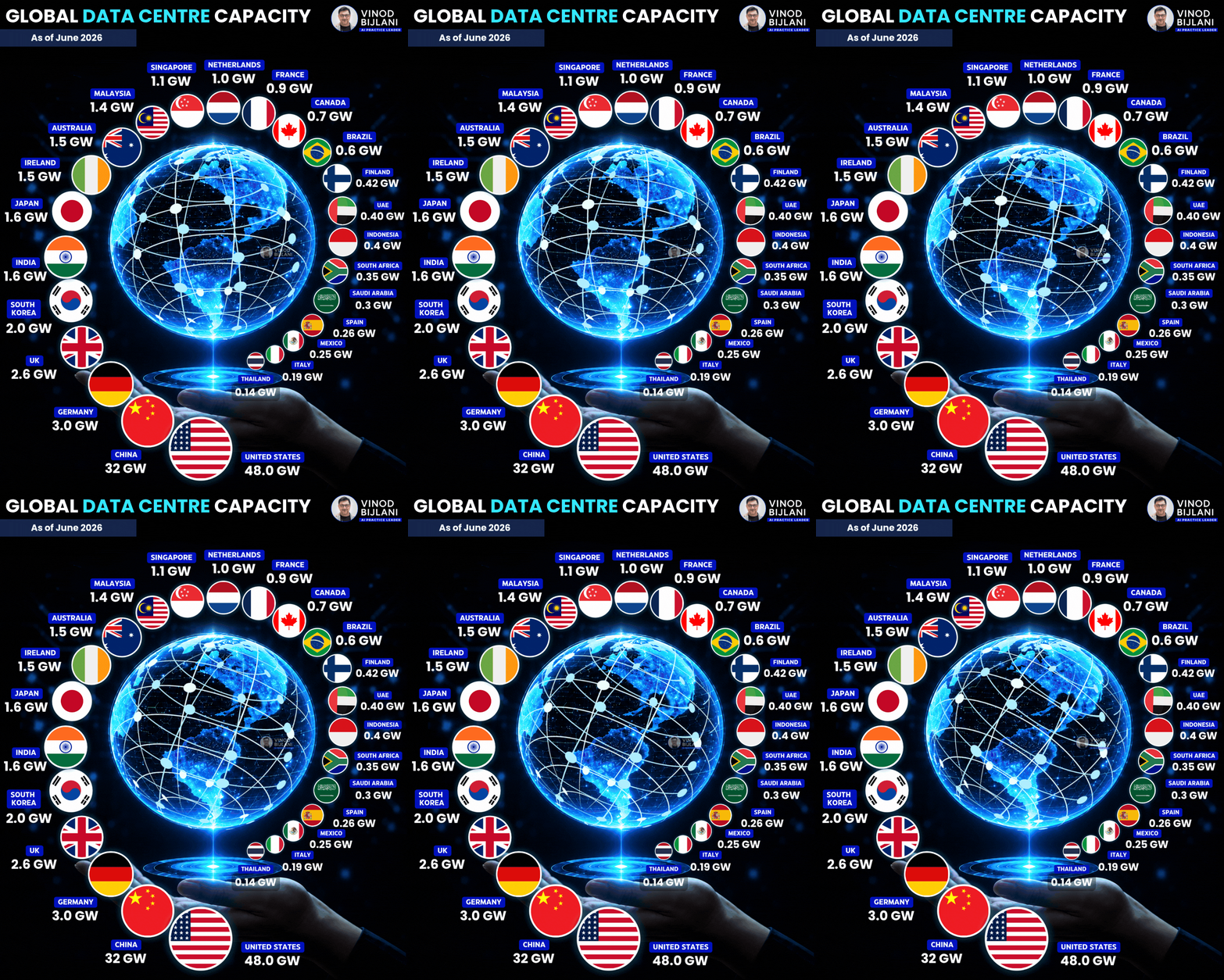
The bigger shift is what we build on top of it: regional AI factories designed around energy, and a complete sovereign AI supply chain.
Asia's AI factory capacity could reach 71 to 84 GW by 2030. Power, economics, security and governance will decide how much of it creates value.
Takeaways from the SUSE Summit Sydney customer panel on what it takes to move enterprise AI from pilots into production.
AI at scale is no longer a model challenge. It is an infrastructure, operations and economics challenge.
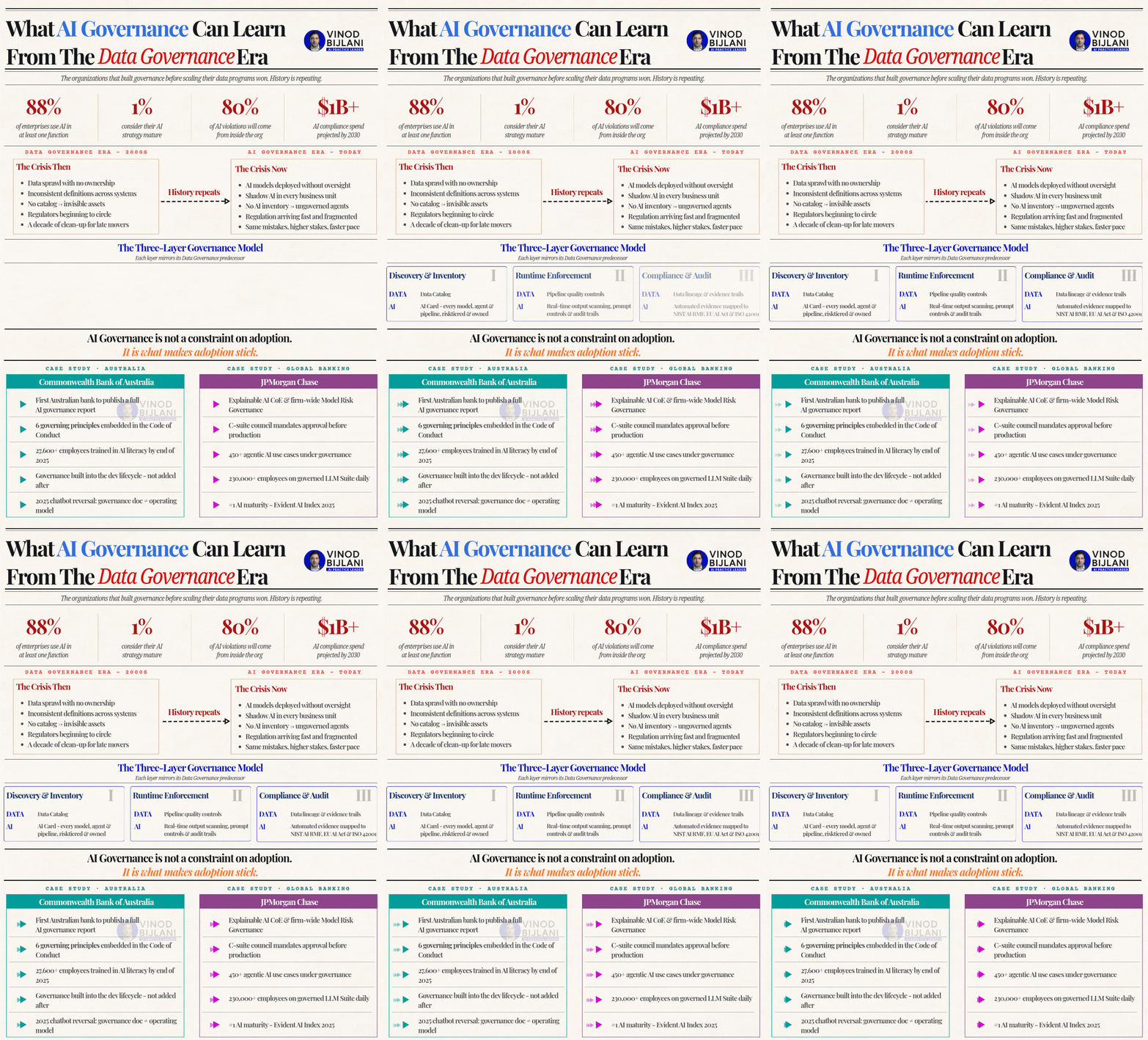
The organisations that built governance before scaling their data programmes won. History is repeating with AI.
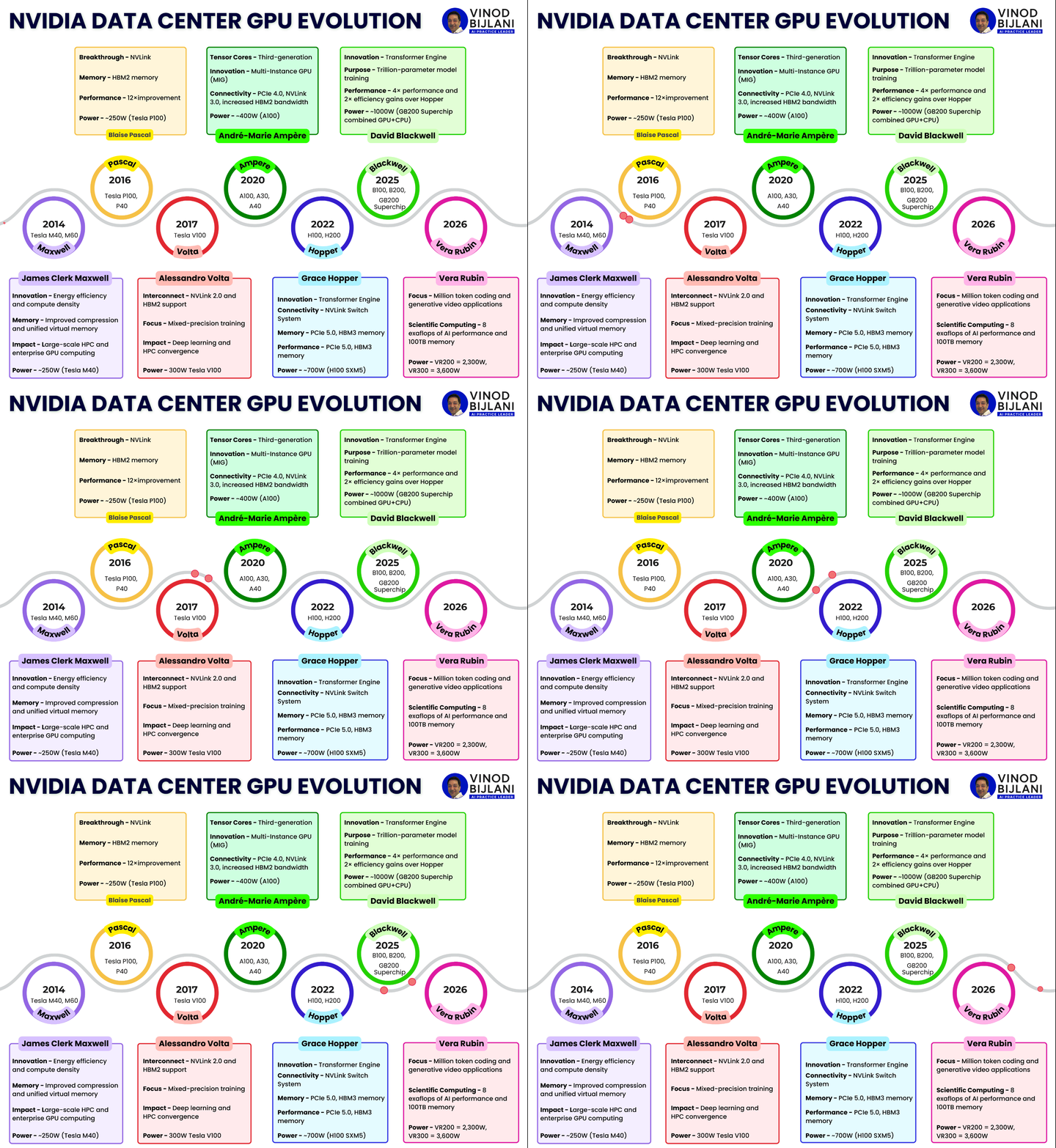
What the V, A, H, B and GB in NVIDIA's data centre GPUs really mean, and why the roadmap reads as an AI infrastructure strategy.
Keynotes, panels and executive briefings on AI factories, sovereign AI and AI economics. Send a message on LinkedIn.