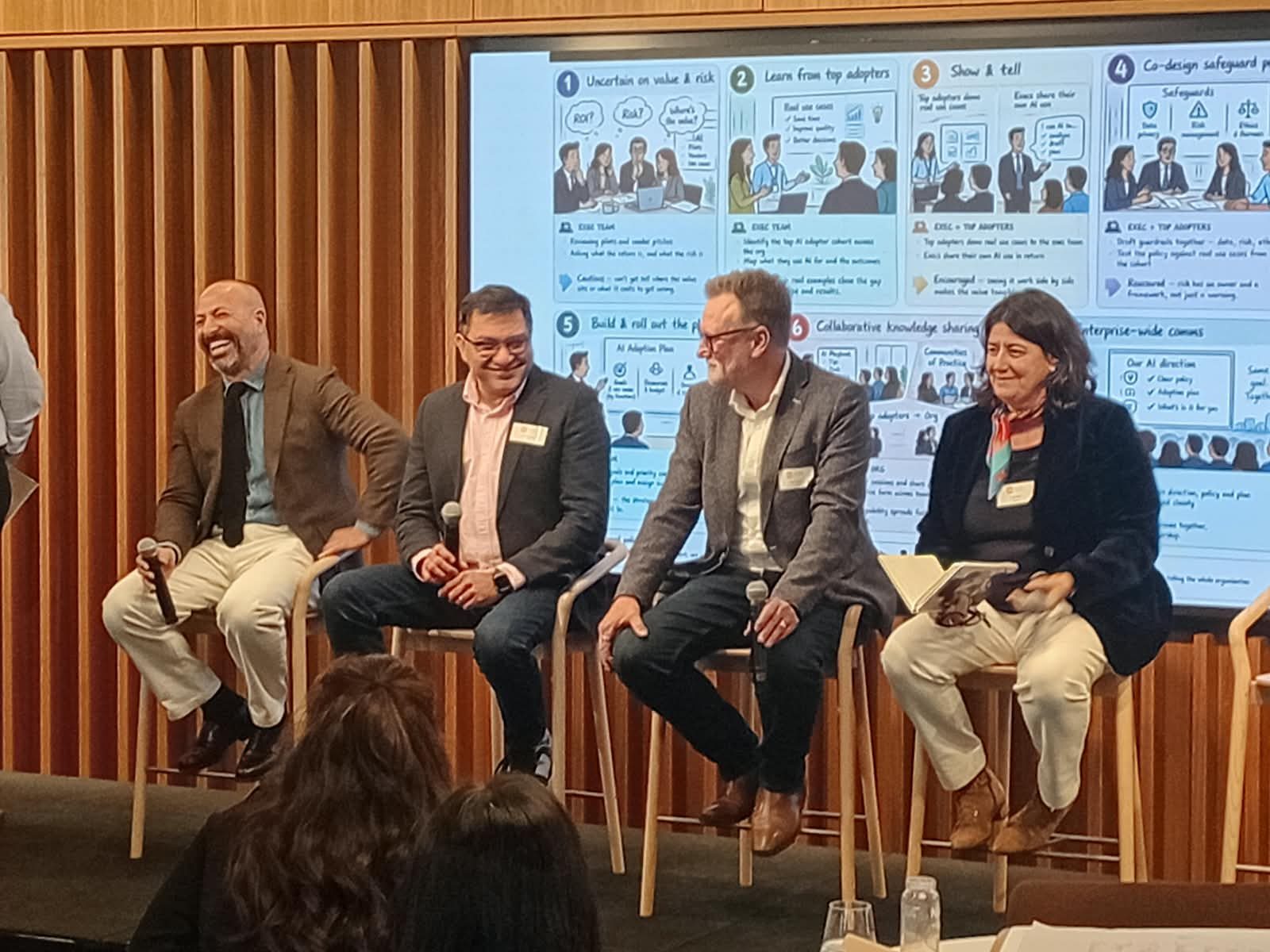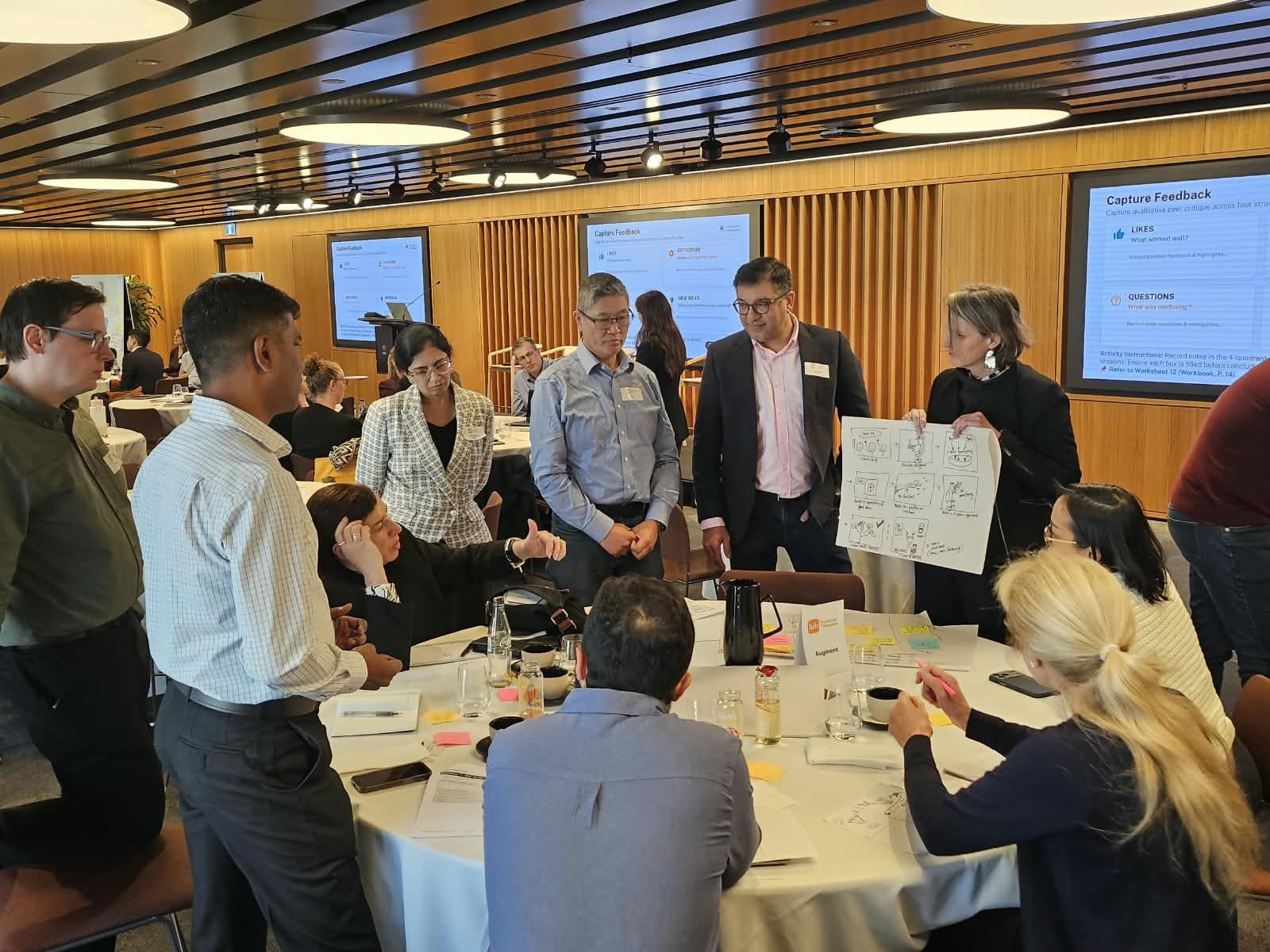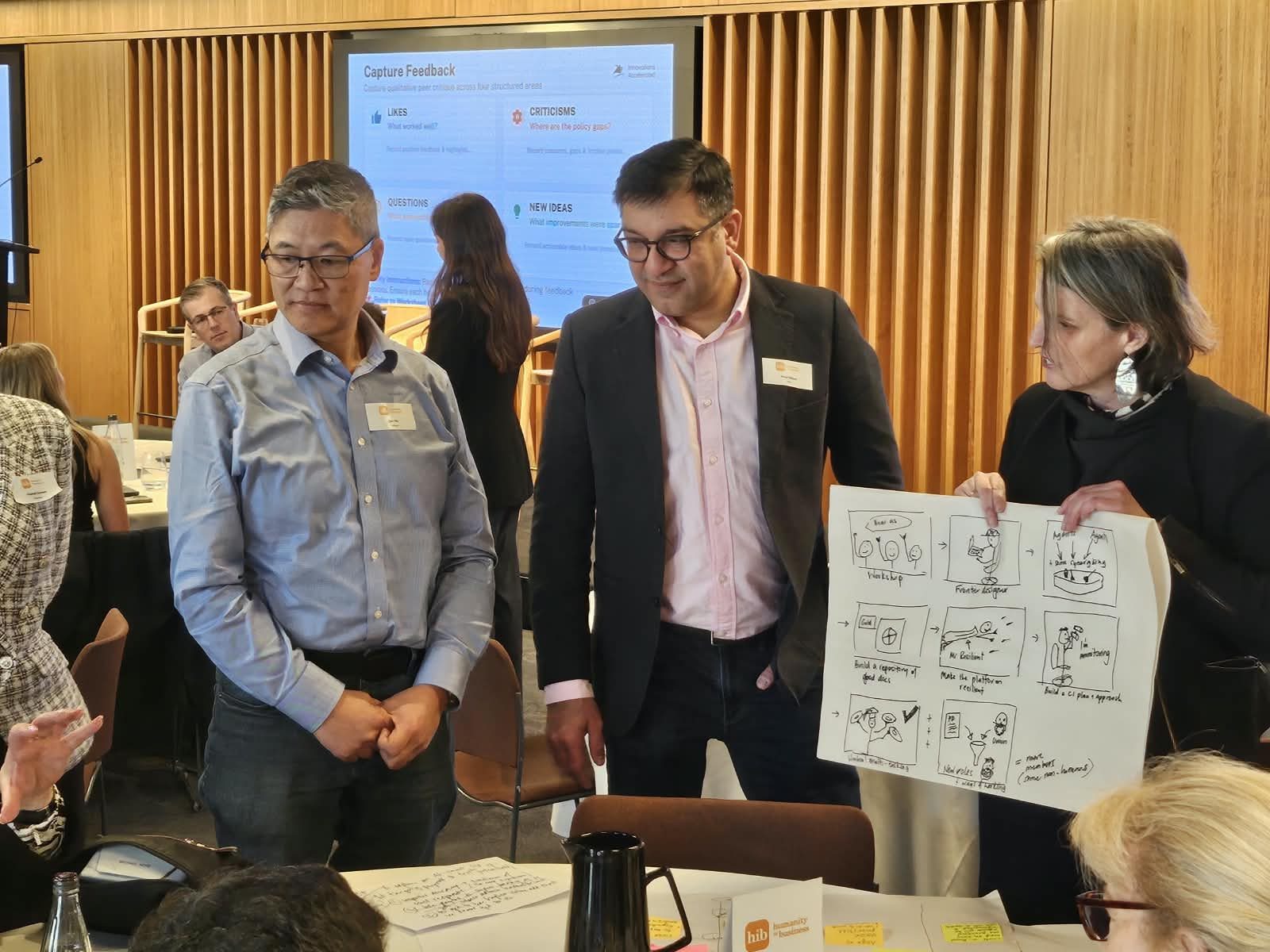
Every task we automate changes more than productivity. It changes how people learn, make decisions and take responsibility, and how work flows through the organisation.
Those questions shaped the AI Workforce Redesign Hackathon in Sydney on 16 September 2026, hosted by Humanity in Business, where I joined as a judge. Ten teams of five worked from 8 am to 4 pm on workforce challenges, using design thinking, and presented their proposed solutions. Each team showed how differently the same challenge could be approached.
A few ideas stayed with me:
- Set the constraints aside first. Explore what the work could become before narrowing the options, then bring real constraints back to test feasibility.
- Redesign the whole process. Map the tasks, decisions and handoffs. If AI accelerates one step, what happens downstream? Review, approvals and exception handling need to evolve too.
- Rethink the operating model. Who owns the workflow? What can an agent decide? When must a person intervene? Define decision rights, accountability and how teams work together.
- Prepare people to lead agents. Prompting is only the beginning. Employees need to direct, monitor and validate agents, with the authority to act.
- Protect the path to expertise. If AI handles entry-level tasks, graduates need new ways to build judgement: simulations, supervised decisions and customer exposure.
- Give freed capacity a purpose. Better service, deeper analysis and new opportunities, supported by reskilling, shared incentives and measures that recognise outcomes.
My takeaway: the AI roadmap, the workforce plan and the operating model need to be designed together.
Photos · 3